

The Mahabodhi Temple, Bodh Gaya, 2023
Explore the many ways people think about God.
One God, one God in many forms, many gods, a path with no creator, or no God at all. Each view is described as the people who hold it would recognize it, with each tradition's own account beside historians' views and every fact sourced.
The verdict is yours.
World Religions
6 faith guides of 8 pages each, and 5 comparisons
The Existence of God
The arguments for and against, step by step
Theological Views
Two positions inside one faith, side by side
Historical Evidence
60 manuscripts, inscriptions, and printed editions, and the Map
Books
7 books, both sides at full strength
The Existence of God
The arguments for and against God, step by step
Each argument is laid out as a map: its steps in order, and under each step what its defenders say and what its critics say, side by side at equal width.
The Kalam cosmological argument
Did the universe have a cause?
The problem of evil
Why would a good God allow suffering?
The fine-tuning argument
Is the universe fine-tuned for life?
Divine hiddenness
If God exists, why do some sincere seekers not believe?
The moral argument
Does morality point to God?
Naturalism and simplicity
Does the world need God to explain it?
Start with the question, the main positions, and how to read the maps
World Religions
The faith guides
Every guide has the same eight pages, in the same order and at the same depth, so any two can be read side by side.
The Church of the Holy Sepulchre, Jerusalem, 2012
The ghats (riverside steps) at Varanasi, 2022
The Kaaba, Mecca, 2008 or earlier
The Western Wall, Jerusalem, 2007
The Salt Lake Temple, Salt Lake City, 2007


Two traditions, side by side
Christianity vs Buddhism
Christianity and Buddhism side by side: ultimate reality, the human problem, salvation or liberation, life after death, and how each sees the other.
Photo: Jorge Láscar, CC BY 2.0 Photo: Rohit Sharma, CC BY-SA 4.0
Christianity vs Hinduism
Christianity and Hinduism compared on God, origins, scripture, the human problem, salvation or liberation, death, central figures, worship, and each other.
Photo: Jorge Láscar, CC BY 2.0 Photo: Prashant Kharote, CC BY 4.0
Christianity vs Islam
Christianity and Islam on God, Jesus, Muhammad, scripture, the human problem, salvation, and the afterlife, with views from Christian and Muslim branches.
Photo: Jorge Láscar, CC BY 2.0 Photo: Bluemangoa2z, CC BY-SA 2.5 (cropped)
Christianity vs Judaism
Christianity and Judaism side by side: God, origins, scripture, the human problem, the way forward, after death, practice, and how each sees the other.
Nicene Christianity vs the Latter-day Saint faith
Nicene Christianity and the Latter-day Saint faith compared on God, scripture, salvation, the afterlife, and how each sees the other, with sources for both.
Photo: Jorge Láscar, CC BY 2.0 Photo: Bobjgalindo, CC BY 4.0


Theological Views
Where one faith divides
Two positions inside one faith, set side by side at equal length, each in its own words. The section begins with Christianity; each faith guide's Branches page sets out that faith's own divisions.
Evangelical vs Progressive Christianity
- The Bible: God's word, human words, and how to read them
- Salvation and other religions
- Certainty, doubt, and questions

Catholic vs Protestant
- Scripture, tradition, and who interprets them
- Justification: how a person is made right with God
- The Eucharist and the Lord's Supper: what happens at the table
On these pages the first-named side is shown in teal and the second in copper. The colors mark the two sides only.
Manuscripts and inscriptions, and how each faith spread
Writings
The surviving manuscripts, scrolls, inscriptions, and early printed editions behind each faith's texts. Each entry keeps three dates apart: the date of the text itself, the date the copy was made, and the date it was found.


Pictures: Library of Congress, Asian Division. Public domain; Yale University Art Gallery, via Wikimedia Commons. CC0; Tubingen University Library. Public domain; Tubingen University Library. Public domain; A 1903 plate, with the letters inked in, from Stanley A. Cook, via Wikimedia Commons. Public domain; Internet Archive scan of a University of Pittsburgh copy, via Wikimedia Commons. Public domain.


Books
The Strongest Case
Both sides at full strength. The verdict is yours.
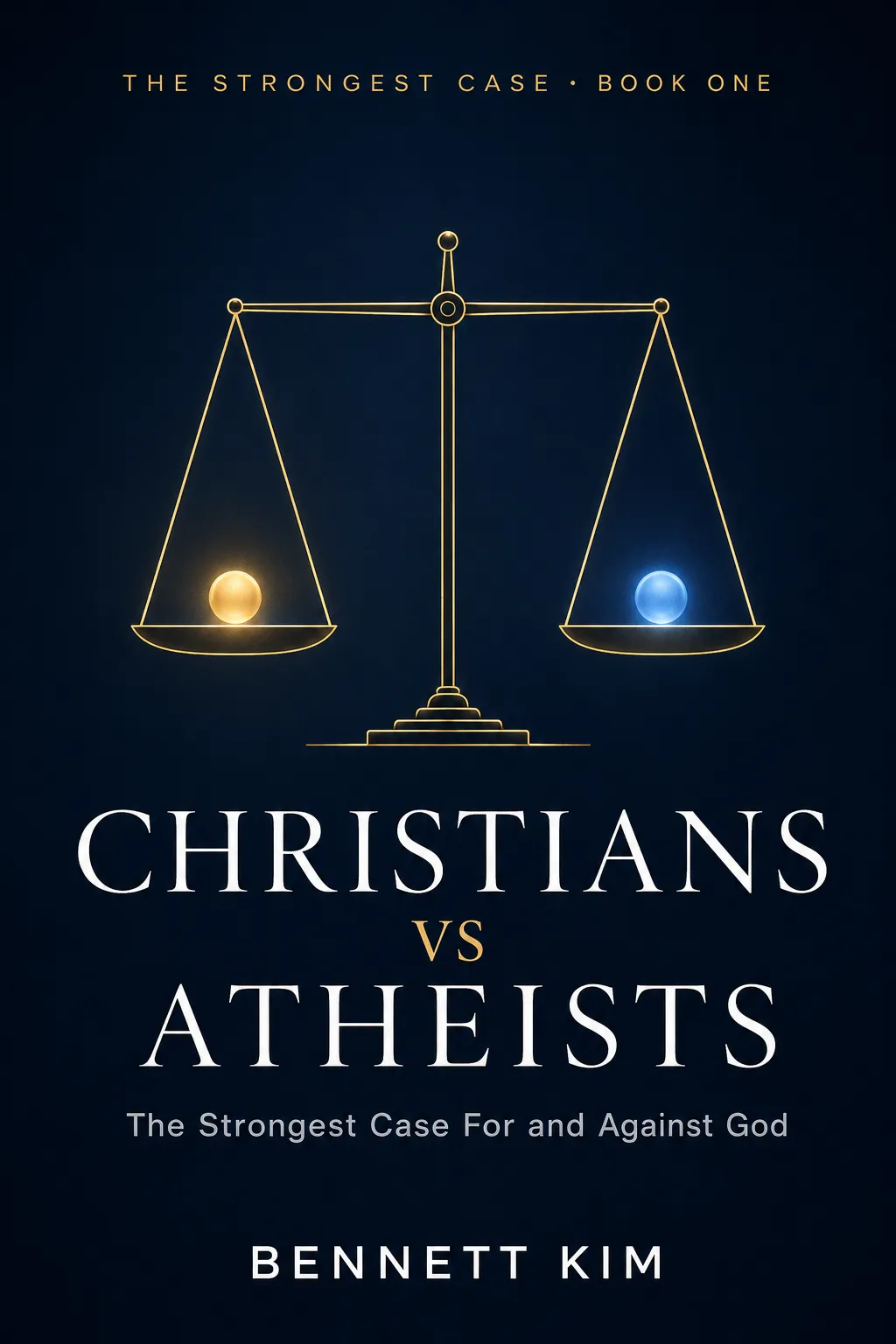
Book 1
Christians vs Atheists
The Strongest Case For and Against God
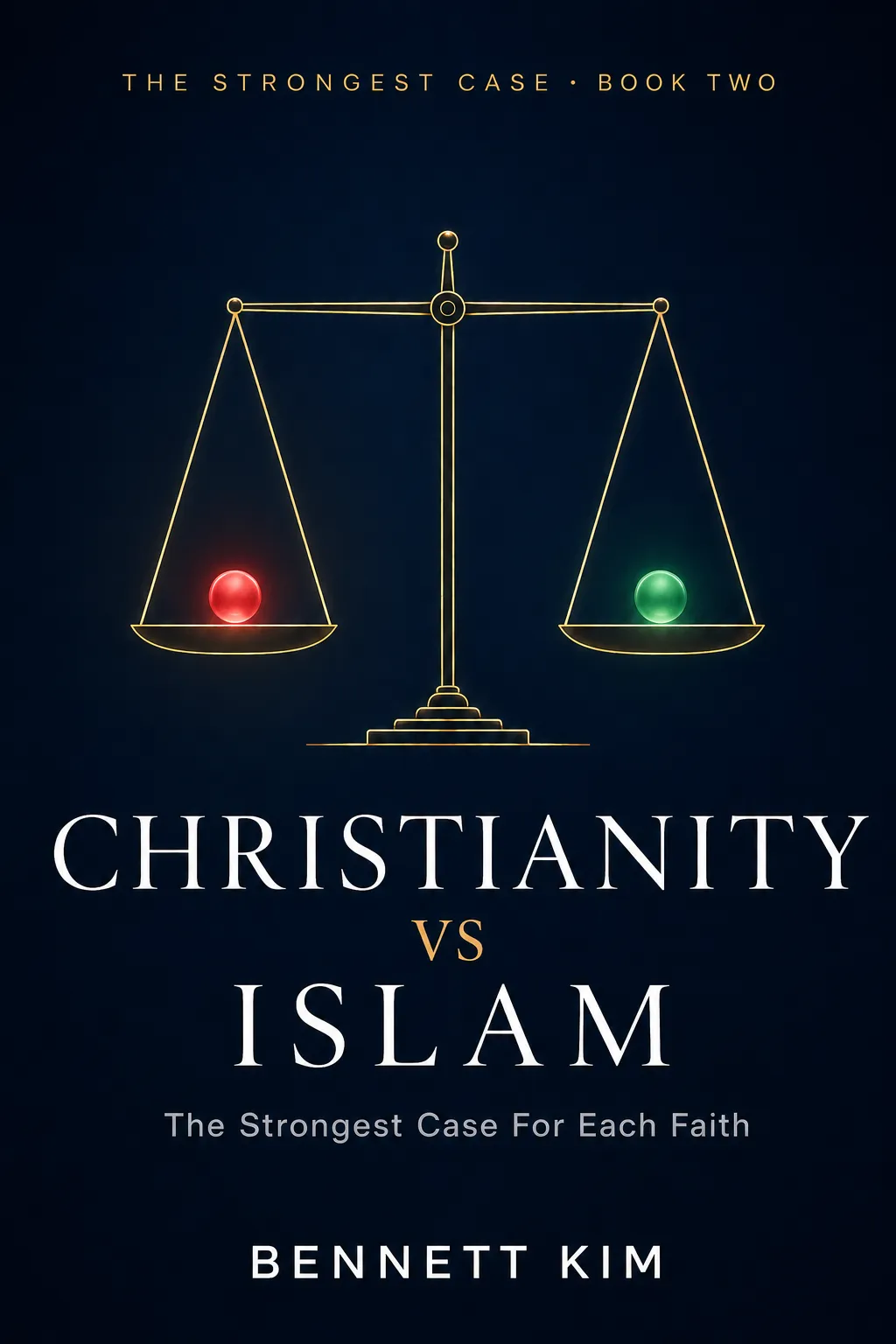
Book 2
Christianity vs Islam
The Strongest Case For Each Faith
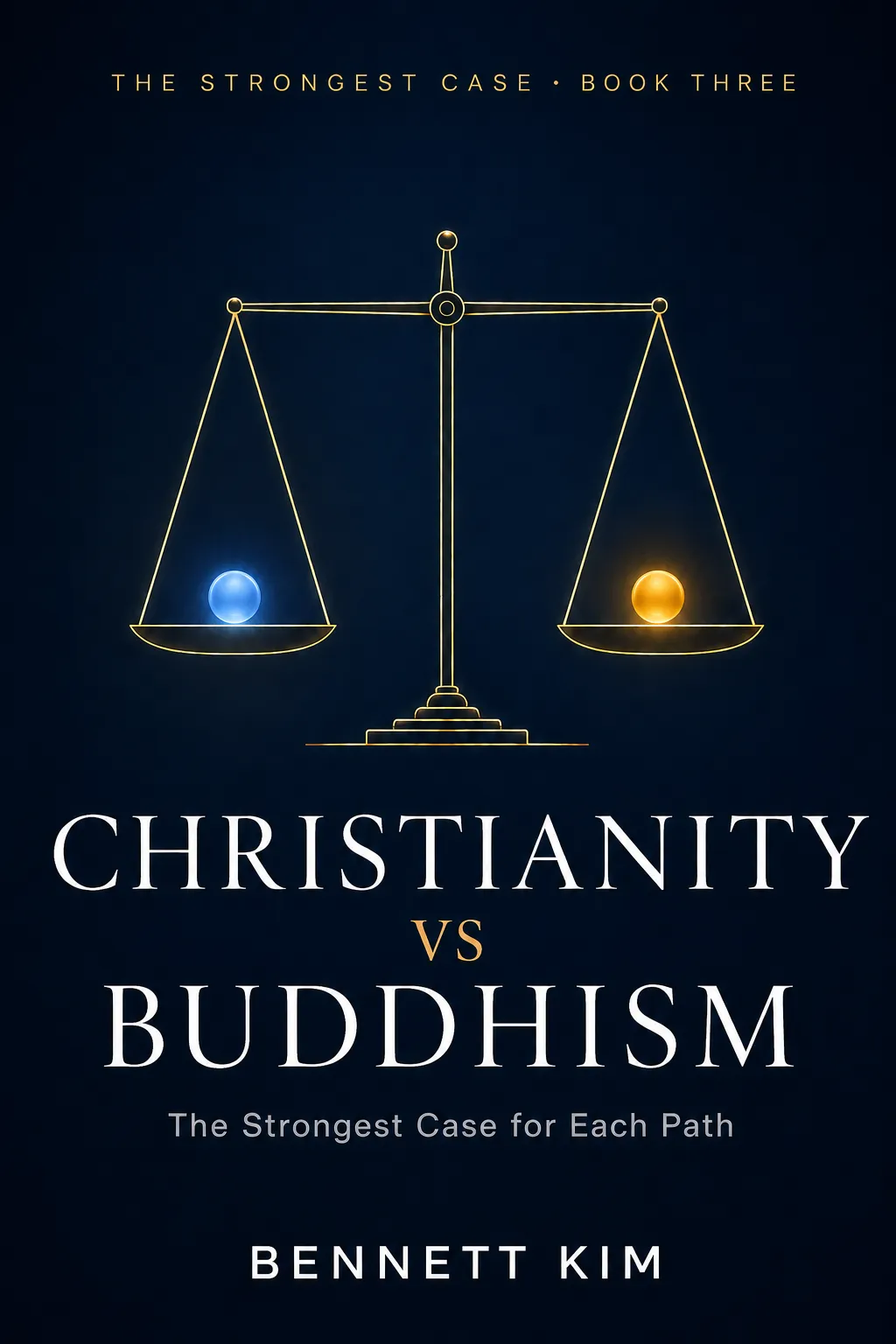
Book 3
Christianity vs Buddhism
The Strongest Case for Each Path
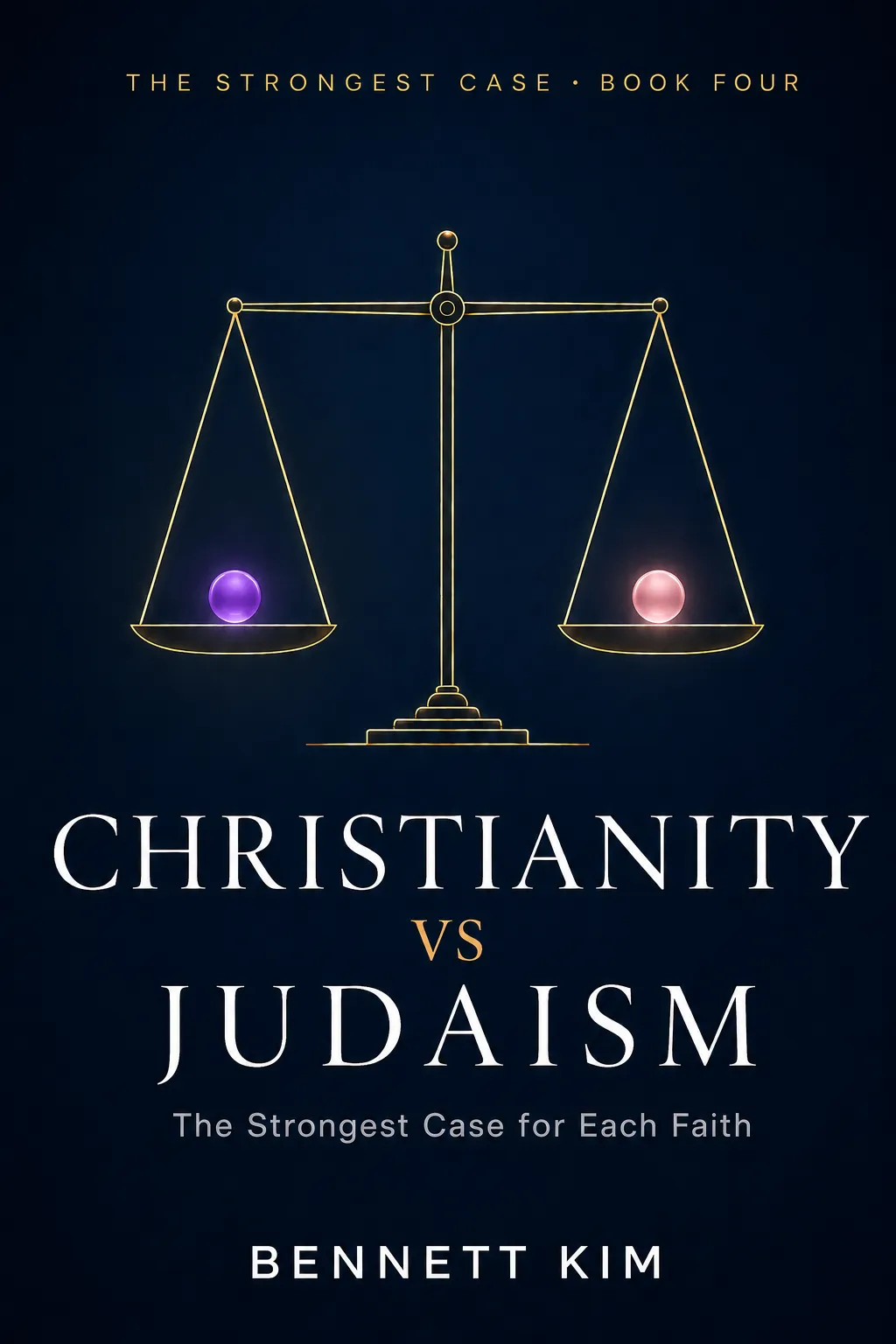
Book 4
Christianity vs Judaism
The Strongest Case for Each Faith
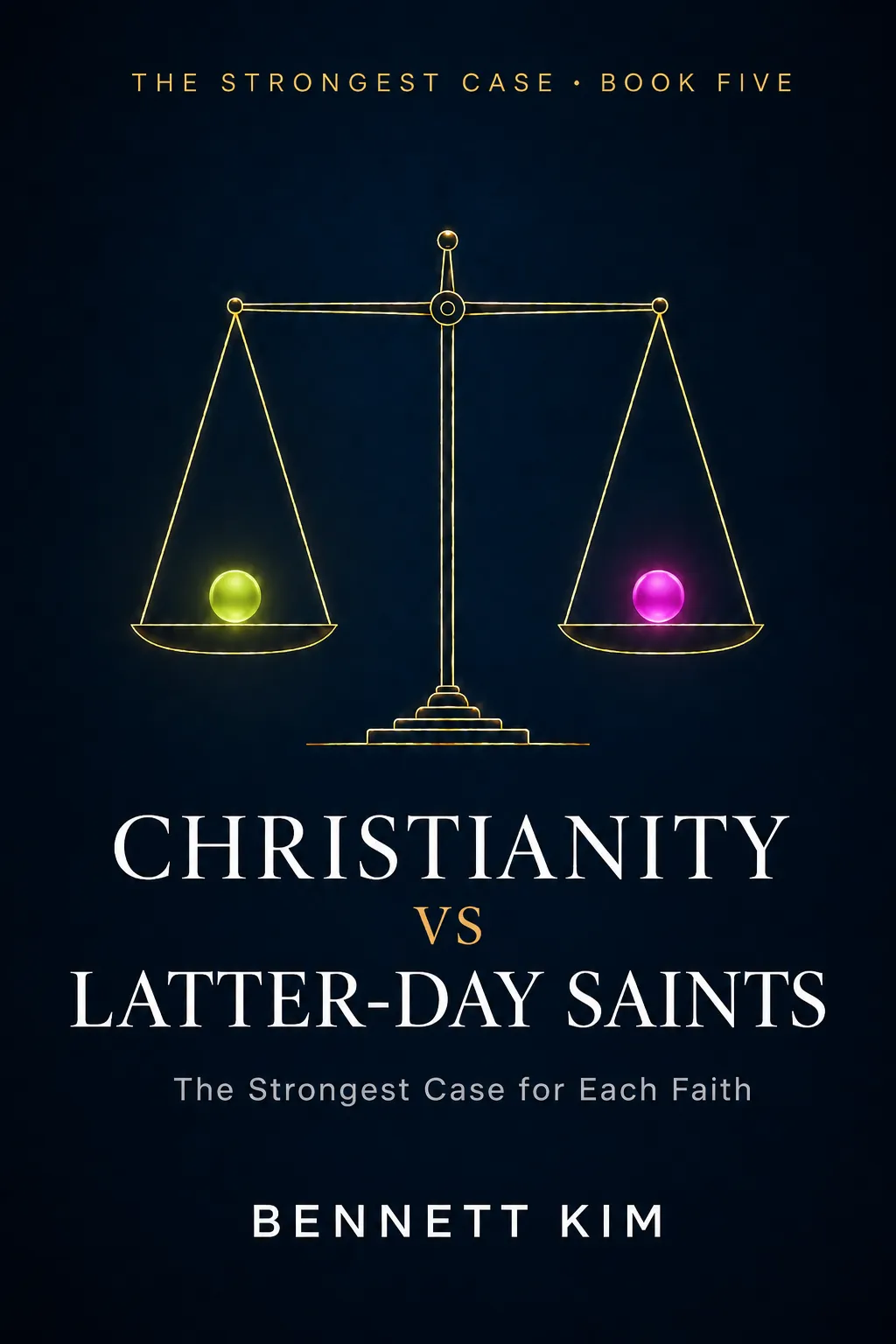
Book 5
Christianity vs Latter-day Saints
The Strongest Case for Each Faith
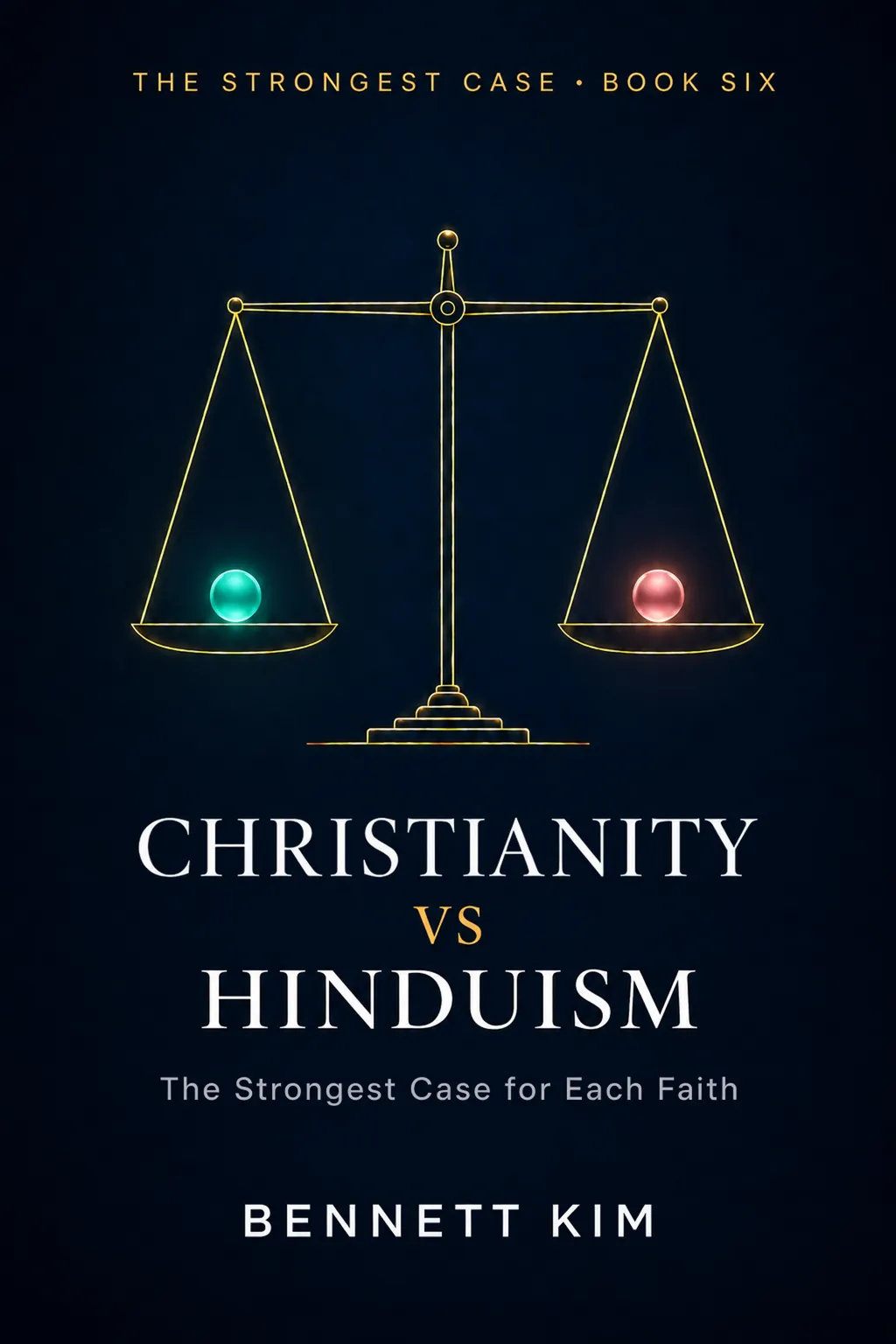
Book 6
Christianity vs Hinduism
The Strongest Case for Each Faith


The Strongest Case Debates
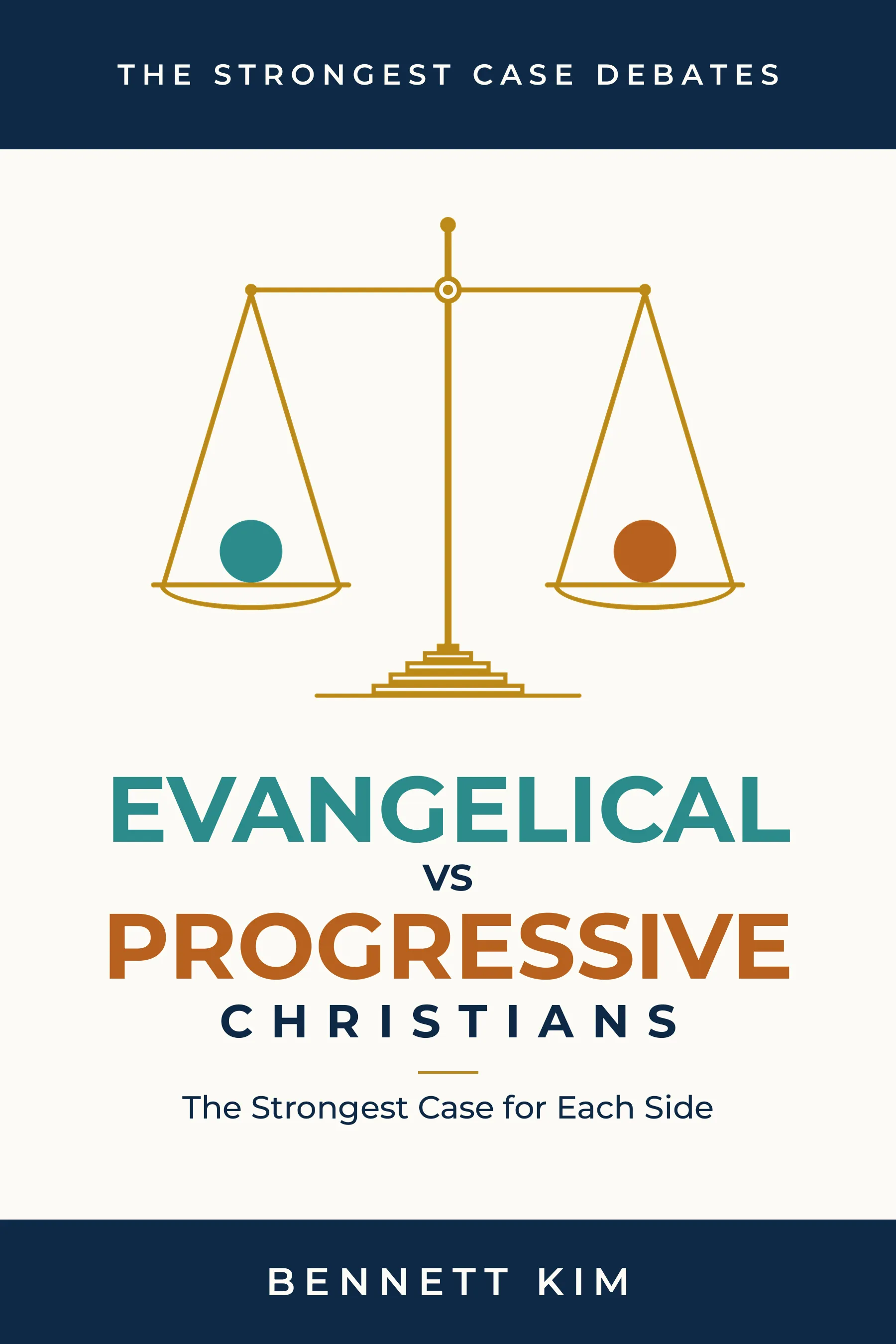
Debates, Book 1
Evangelical vs Progressive Christians
The Strongest Case for Each Side


